
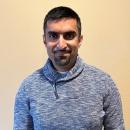
Anshuman Chadha
Director, Developer Platform ·
Anshu manages Uber's developer platform organization, which has the mission to enable Uber developers to build high-quality software consistently and without frustration. Prior to Uber, he worked in tech companies around the Puget Sound area (Facebook, Amazon and Microsoft)
PRESENTATIONS
Shepherd: How we handle Uber-Scale Migrations at Uber
Modern engineering organizations aren’t limited by what they can build — they’re limited by how safely and efficiently they can evolve what already exists.
At Uber’s scale, even “routine” migrations — language upgrades, API deprecations, security remediations, framework shifts — can span thousands of services across multiple monorepos. Without strong automation and coordination, these efforts create review overload, ownership ambiguity, and operational risk — slowing down critical platform and business initiatives.
In this talk, we’ll share how we built Shepherd, Uber’s large-scale migration platform, to make organizational change a structured, repeatable capability.
To date, Shepherd has transformed over 4.3 million lines of code, generated and orchestrated 30,000+ diffs across five monorepos, and enabled critical company-wide initiatives — including major Java upgrades, context propagation adoption, Redis version migrations, and other foundational platform improvements. Efforts that previously required quarters of manual coordination can now be executed in weeks, with measurable progress and controlled rollout.
Shepherd combines deterministic, compiler-aware code transformations with AI-assisted remediation, automated diff orchestration, ownership-aware routing, and integrated validation pipelines. Migrations become observable workflows — with safety gates, feedback loops, and production-aware safeguards — rather than one-off engineering campaigns.
But the broader impact extends beyond migrations.
The infrastructure built to automate change at scale — validation gating, large-scale diff management, review signal collection, and ownership-aware execution — is now forming the foundation for production-safe, agentic development workflows. By embedding AI within deterministic, validated engineering loops, we move beyond isolated code generation toward systems that can propose, validate, and safely land changes in real production environments.
This talk examines how to scale change — technically and organizationally — and what that enables for the next generation of AI-driven software development.